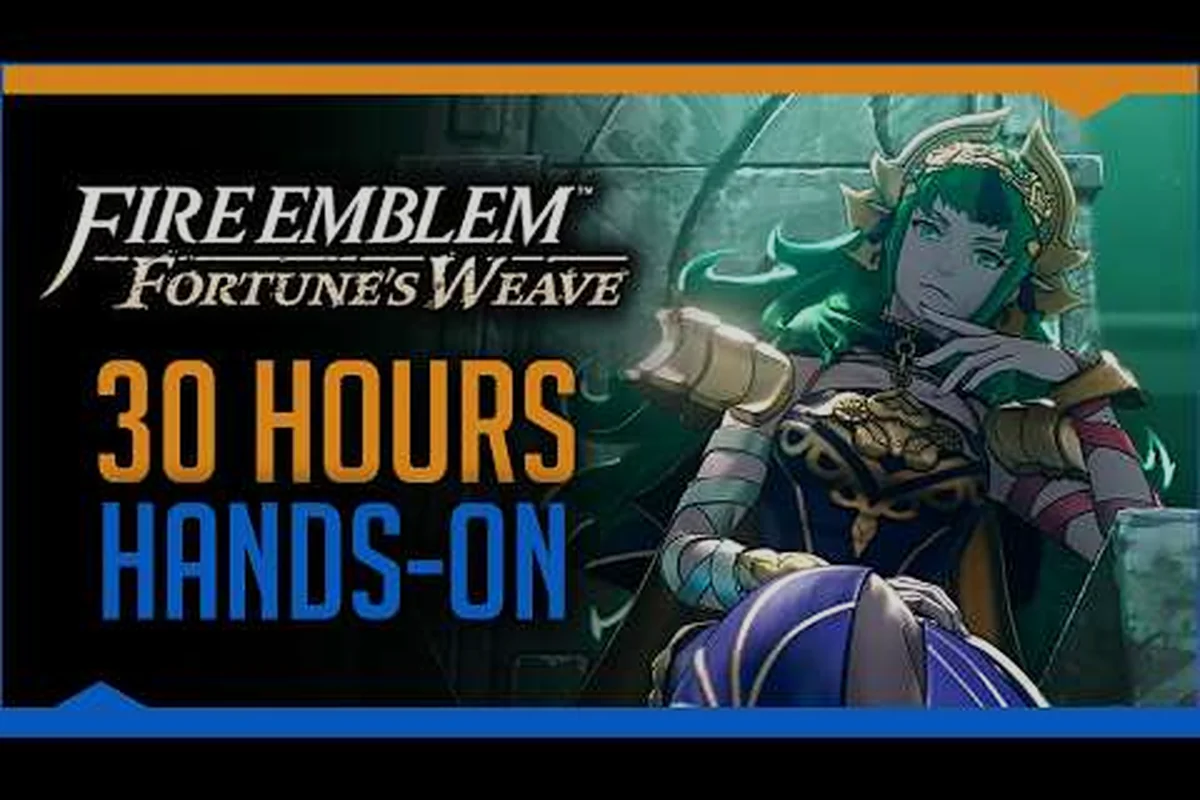
Fire Emblem Fortune's Weave TV mode tips can transform how you experience Intelligent Systems' first Switch 2-exclusive tactical RPG, especially since the September 17 global launch brings a 4K docked presentation that changes how you read the battlefield. Whether you're settling in for a long session on the couch or bouncing between TV and handheld, the way you manage the Blaze Gauge, position your units, and parse enemy ranges on a large screen differs meaningfully from portable play. Get the most out of your docked hours with the strategies below, which cover everything from display calibration to the hidden mechanics that only become obvious when you can see the whole map at once.
Why TV Mode Changes Your Tactical Approach
| Blaze Art | Blaze Gauge Cost | Base Might | Burst Effect |
|---|---|---|---|
| Flame Fang | 25 | 8 | +3 Might, +10 Crit |
| Ember Lance | 30 | 11 | +4 Might, +15 Hit |
| Sunburst Volley | 40 | 14 | +5 Might, +20 Crit |
| Inferno Crash | 50 | 18 | +6 Might, +25 Crit |
| Crest Type | Hero's Relic | Stat Bonus | Durability |
|---|---|---|---|
| Crest of Dagdan | Dagsion's Edge | +5 Str, +3 Spd | 25 |
| Crest of Ornius | Ornius's Fang | +4 Mag, +4 Res | 22 |
| Crest of Weave | Weave's Loom | +3 Def, +3 Res | 20 |
| Crest of Flame | Flame's Brand | +6 Str, +2 Def | 18 |
| Difficulty | Enemy HP Multiplier | Enemy Damage Multiplier | Gold Reward Multiplier |
|---|---|---|---|
| Normal | 1.0x | 1.0x | 1.0x |
| Hard | 1.3x | 1.2x | 1.5x |
| Lunatic | 1.6x | 1.5x | 2.0x |
| Maddening | 2.0x | 1.8x | 2.5x |
Playing Fire Emblem Fortune's Weave on a television isn't just a visual upgrade — it fundamentally alters how you process information during combat. The larger canvas means you can track enemy reinforcement spawns, Crest activation zones, and Ornius mount movement patterns simultaneously, something that's genuinely harder on the 7.9-inch handheld screen. Because the game renders at 4K when docked, unit details like weapon type indicators and Blaze Art charge states become readable at a glance without needing to hover over every character.
The practical payoff comes in how you plan multi-turn sequences. On TV, you can hold the full map layout in your peripheral vision, which lets you spot approach corridors that the Dagdan Empire units might funnel through two or three turns ahead. Community reports from early preview events suggest that players who primarily play docked tend to rely less on the auto-battle feature, because they can actually see the consequences of their positioning choices. That awareness translates directly into better resource management, since you'll waste fewer turns correcting mistakes that a quick glance at the full battlefield could have prevented.
If you're still getting comfortable with the core systems, the new player guide walks through the basics of unit management and objective prioritization, which pairs well with the TV-specific tactics covered here.
Setting Up Your Display for Tactical Clarity
Calibrating Brightness and Contrast
The first thing you should do before starting a campaign is adjust the display settings, because Fire Emblem Fortune's Weave uses subtle color cues that get washed out on poorly calibrated screens. The Blaze Gauge charges with a warm orange glow, and enemy units that have Burst state active display a red aura — both of which become harder to distinguish if your contrast is set too high. Nintendo's official Singapore page for the game recommends playing in a dimly lit room to preserve the intended visual balance, which is worth keeping in mind if your living room has large windows.
Choosing Between Performance and Resolution Modes
Switch 2 offers two docked profiles for this title, and your choice affects more than just frame rate. The Performance Mode targets 60 FPS and is the better pick for maps with heavy particle effects, particularly when multiple Blaze Arts go off in the same turn. The Resolution Mode locks to 30 FPS but maintains full 4K output, which makes reading small text and unit icons easier during long sessions. Most players who prioritize tactical clarity over smoothness choose Resolution Mode, but if you find yourself frequently rewinding turns, the extra fluidity of Performance Mode might help you track animations more effectively.
Managing Screen Real Estate
The game's UI scales automatically when docked, but you can further customize the battle info panel density in the options menu. Veterans recommend setting the enemy range display to "always on" when playing on TV, since the larger screen means the colored overlays don't obscure as much of the map as they do in handheld mode. This single setting dramatically reduces the mental math required to position fragile units like mages and archers safely.
Hidden Mechanics That Shine on a Big Screen
The Blaze Gauge and Burst State Synergy
One of the more subtle systems in Fire Emblem Fortune's Weave is how the Blaze Gauge interacts with unit positioning. Each character builds gauge charge by landing attacks, but the rate increases when they stand adjacent to an ally who is already in Burst state. On a TV screen, you can track these adjacency bonuses across your entire army at once, which makes it much easier to chain activations across multiple fronts. Community testing suggests that a well-coordinated burst chain can keep two or three units in Burst state for consecutive turns, effectively doubling their damage output during critical enemy phases.
Crest Activation Zones
The Crests tied to each Hero's Relic create activation zones that extend two tiles in a cross pattern from the bearer. These zones grant passive bonuses to allies standing inside them, but the exact effect depends on which Crest is equipped. On a smaller screen, it's easy to lose track of these zones during chaotic turns. Docked play lets you visually confirm that your units are positioned to benefit from the Crest of Dagdan (which boosts defense) or the Crest of the Weave (which accelerates Blaze Gauge charging) without cycling through unit menus.
Ornius Mount Movement Patterns
The Ornius mounts, which serve as this game's cavalry equivalent, have a unique movement quirk that becomes far easier to exploit on TV. When an Ornius unit moves, it leaves a temporary trail that grants a small speed bonus to allied units that follow the same path on the next turn. This is a hidden mechanic that many players miss entirely in handheld mode because the trail fades quickly and is hard to spot on the smaller display. On a large screen, you can plan multi-unit advances that chain these movement bonuses, letting your infantry keep pace with your mounted units across long distances.
Single Player Campaign Strategies for Docked Sessions
Managing the Five-Chapter Prologue
The opening hours of Fire Emblem Fortune's Weave introduce you to the five protagonists — Kai, Ditrich, Theodora, Reda, and Eshmel — across a prologue that spans five chapters. Each character brings a distinct weapon type to your roster, and the game does a good job of teaching you their strengths through forced deployment. When playing on TV, take the time to study the weapon triangle (swords, gauntlets, lances, axes, bows, and magic) during these early maps, because the larger display makes it easier to memorize which units counter which enemy types.
The Five-Year Time Skip
After the prologue, the story jumps forward five years, and your army composition changes significantly. This is where the Dagsion stronghold becomes your home base between missions. Community reports indicate that players who spend time exploring Dagsion thoroughly during this phase unlock additional recruitment opportunities and side quests that aren't available if you rush through the main story. On TV, the stronghold's detailed environments are a treat to explore, and the larger screen makes it easier to spot interactable objects that might blend into the background on handheld.
Dungeon Crawling in Docked Mode
Fire Emblem Fortune's Weave includes dungeon segments that break from the grid-based combat. These areas play more like a traditional action-RPG, with real-time movement and exploration. The dungeon camera behaves differently when docked, offering a wider field of view that helps you spot treasure chests and hidden passages. If you're struggling with a particular dungeon, switching to TV mode might genuinely help, since the expanded view reduces the chance of walking past a concealed entrance.
Advanced Tactics for Late-Game Maps
Managing the Dagdan Empire's Elite Units
Late-game maps throw increasingly dangerous Dagdan Empire units at you, including armored knights with high defense and mages with devastating area-of-effect spells. The key to surviving these encounters is enemy phase planning — positioning your units so that the AI's attacks trigger your counterattacks under favorable conditions. On TV, you can more easily identify which enemy units have Brave weapons (which attack twice) and adjust your positioning accordingly, since the visual indicators are more distinct at 4K resolution.
The Heroic Games Side Content
One of the more engaging side activities is the Heroic Games, a tournament mode where you field a small team against escalating waves of opponents. This mode rewards deep knowledge of Blaze Art combinations, since you need to maximize damage output with limited resources. The tournament brackets are displayed on a dedicated screen that's much easier to read when docked, letting you plan your team selection based on upcoming matchups without squinting at a small display.
Save Management Between Sessions
Because TV mode sessions tend to be longer than handheld sessions, you'll want to be deliberate about when you save. The game supports multiple save slots, and the save data cloud guide explains how to back up your progress across consoles. This is particularly useful if you alternate between docked and handheld play, since you can pick up your campaign on the go without losing progress. For a deeper dive into the combat systems that matter most in these late-game encounters, the turn-based combat guide breaks down the grid mechanics and Blaze Art synergies in detail.
Frequently Asked Questions
What are the best Fire Emblem Fortune's Weave TV mode tips for beginners?
Start by enabling the always-on enemy range display and switching to Resolution Mode for clearer unit icons. Spend your first few docked sessions studying the Blaze Gauge mechanics and Crest activation zones, since the larger screen makes these systems much easier to understand. Don't rush through the prologue — the five chapters teach essential positioning skills.
How do I unlock the hidden mechanics in Fire Emblem Fortune's Weave?
The Ornius mount trail bonus and Crest adjacency effects are active from the start, but easy to miss. Explore Dagsion thoroughly after the five-year time skip to unlock side quests that introduce additional mechanics. The Heroic Games tournament mode also teaches advanced Blaze Art combinations through practical application.
Does Fire Emblem Fortune's Weave single player guide content differ between TV and handheld mode?
No, the campaign content is identical across both modes. However, the way you perceive information changes significantly. TV mode's larger display makes it easier to track enemy ranges, Crest zones, and mount trails simultaneously, which can improve your tactical decision-making even though the underlying mechanics remain the same.
What is the best way to start a new campaign in Fire Emblem Fortune's Weave?
Begin with the prologue chapters to learn each protagonist's weapon type and role. Focus on building balanced team compositions that cover the weapon triangle, and prioritize exploring Dagsion between missions to unlock recruitment opportunities. Save frequently during your first few hours until you understand the difficulty curve.
Are there any secrets in Fire Emblem Fortune's Weave that are easier to find on TV?
Yes — hidden passages, Ornius mount trails, and Crest activation zones become far easier to spot on TV, since the wider camera angle and 4K resolution reveal subtle environmental cues. You can scout dungeon layouts and trigger Hero's Relics without constantly opening menus, letting you focus on positioning during late-game maps.