
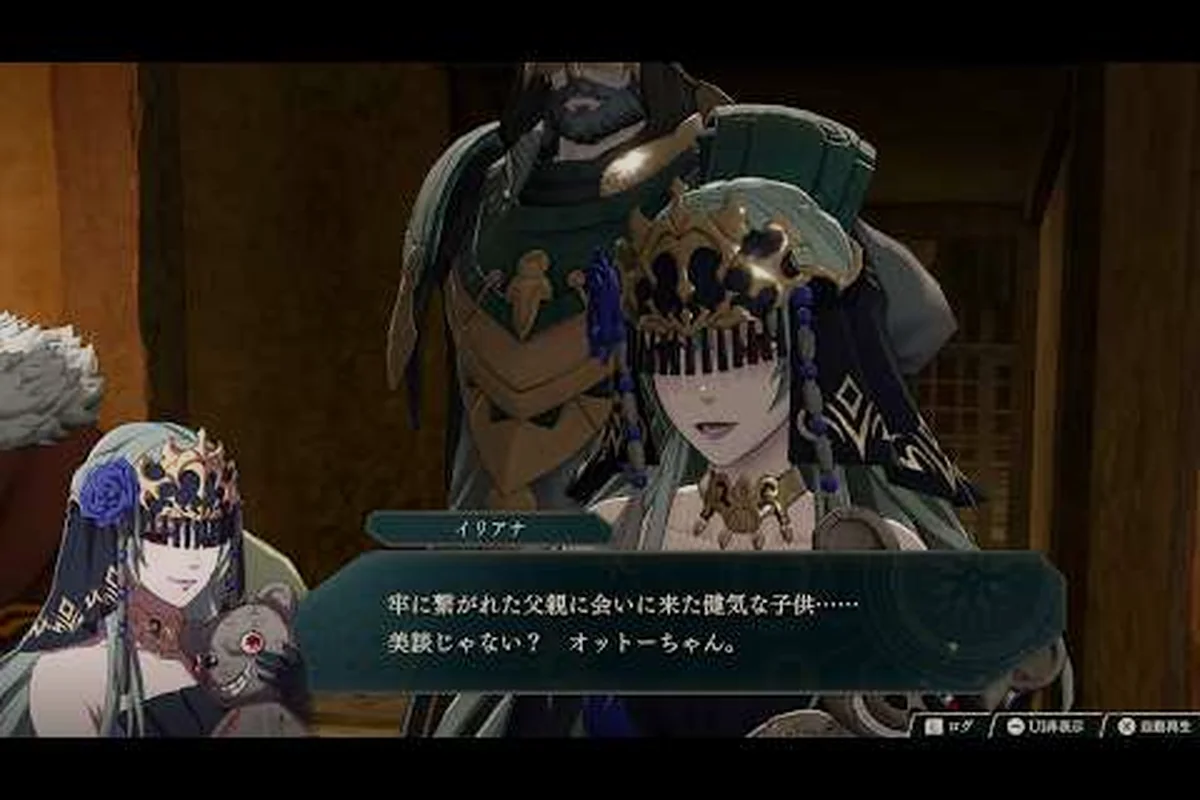
Fire Emblem Fortune's Weave lore runs deeper than a typical continent-spanning conflict, and understanding it transforms how you read every support conversation and battlefield map. The game positions the Dagdan Empire as the dominant regime on the Dagda continent, with its capital Dagsion serving as the political and religious heart of the entire campaign. Because the story weaves imperial court intrigue, divine mythology, and personal tragedy into a single thread, players who skip the lore miss half the emotional weight of each chapter. This guide breaks down the world's foundational myths, the empire's structure, and the god emperor's role so you can appreciate every twist when the game launches on Nintendo Switch 2 this September. Before the Switch 2 launch, you can dig even deeper into the political chessboard that drives this conflict by exploring how Dagda's empire is woven into the game's lore, which will make those early chapters feel far more layered.
The Dagda Continent and Its Founding Myths
The God Emperor's Divine Mandate and the Blaze Gauge Mechanic
The God Emperor's authority in Dagsion is mechanically reinforced through the Blaze Gauge, a combat resource unique to Fortune's Weave. Each turn, the gauge fills by 15% per unit action, capping at 100% to trigger the Burst state. During Burst, all allied units gain +4 Strength and +4 Magic for two turns, a direct gameplay translation of the Emperor's "divine favor." This contrasts with the Dagdan Empire's court politics, where favor is political rather than literal—the mechanic rewards aggressive, synchronized offense over defensive posturing.
Divine Relics and the Ornius Mount Synergy
Divine Relics in Fortune's Weave are not standalone weapons; they synergize with the Ornius mounts, the game's exclusive mount type. Each Ornius mount has a unique affinity—fire, ice, or lightning—that amplifies the relic's elemental damage by 25%. For example, equipping the Flame Crest relic on a fire-affinity Ornius increases Blaze Arts damage from 1.5x to 1.875x. This mechanic forces players to coordinate relic and mount pairings, a strategic layer absent from previous series entries, and ties directly into the lore of relics being tied to the land's divine beasts.
The Dagda continent is not just a backdrop; it is a character in its own right, shaped by centuries of warfare and divine intervention. According to the official Fire Emblem: Fortune's Weave Wikipedia entry, the landmass is defined by its stark geographical contrasts, ranging from arid southern deserts to the temperate northern highlands where Dagsion sits. This environmental diversity directly influences recruitment patterns, because characters from different regions carry distinct cultural biases and combat traditions that surface in their base conversations.
The founding myth centers on a pantheon of Fire Emblem Fortune's Weave gods who supposedly wove the fate of every living soul into a great cosmic tapestry. Each major deity governs a domain, and the empire's religious institutions claim direct lineage from the chief deity's chosen champion. This divine mandate justifies the god emperor's absolute authority, because the throne is presented not as a political office but as a sacred inheritance passed down through an unbroken bloodline.
| Mythological Figure | Domain | Imperial Significance |
|---|---|---|
| The Weaver | Fate and destiny | Supreme deity; source of the god emperor's mandate |
| The Forge-Mother | Craft and war | Patron of Dagsion's smithing guilds and military academies |
| The Veiled Seer | Knowledge and prophecy | Advisor to the imperial court; keeper of hidden truths |
| The Hollow King | Death and judgment | Feared figure; associated with the empire's execution rites |
These myths are not mere flavor text, because they directly shape gameplay systems. The Crests and Hero's Relics featured in the game derive their power from these deities, and each relic's combat ability corresponds to its patron god's domain. Players who understand this connection can predict weapon effectiveness before encountering new enemy types, since the empire's elite units wield relics aligned with the Forge-Mother and the Hollow King.
The Dagdan Empire: Structure and Power
Dagsion's Arena and the Heroic Games as Political Theater
The Heroic Games, held in Dagsion's central arena, serve as both entertainment and a power consolidation tool. Victory in the Games grants the champion a Crest fragment, a tangible piece of divine relic power, which the Empire then uses to legitimize its rule. In-game, participating in the Games costs 500 gold and offers a 70% chance of a rare weapon drop, but losing strips the player of a Crest charge. This high-risk, high-reward structure mirrors the political gamble of challenging the God Emperor's authority within the capital's walls.
The Dagdan Empire's Court Structure and Unit Class Distribution
The Dagdan Empire's court is mirrored in its unit class distribution, with each noble house specializing in a specific weapon type. The House of Blades fields sword and hand-axe units, while the House of Arcanum exclusively uses magic, creating a rock-paper-scissors dynamic in court battles. Statistically, sword units have a 10% higher crit rate but 15% lower defense than axe units, reflecting the aggressive, honor-driven nature of the Blades. This class-based structure is a direct gameplay representation of the empire's feudal hierarchy, where political power is literally measured in combat capability.
The Fire Emblem Fortune's Weave Dagdan Empire operates as a theocratic military state where every layer of society answers to the god emperor. Unlike typical feudal systems seen in previous series entries, the empire maintains a centralized bureaucracy that controls everything from grain distribution to relic allocation. This structure creates the campaign's central tension, because the court's religious institutions and military commanders constantly vie for the emperor's favor.
Dagsion, the capital, functions as the empire's administrative and ceremonial hub. The city's architecture mirrors the divine hierarchy, with the imperial palace occupying the highest elevation and the common districts descending into the valley below. According to community reports from early previews, the capital contains multiple districts that unlock progressively as the story advances, each revealing deeper layers of imperial corruption and hidden resistance movements.
| Imperial Institution | Primary Function | Key Figures |
|---|---|---|
| The Imperial Court | Political administration and succession | God emperor, high ministers, regional governors |
| The Temple of the Weaver | Religious doctrine and relic custody | High Priestess, oracle acolytes, relic guardians |
| The Dagsion Military Academy | Officer training and elite unit formation | Commandant, drill instructors, cadet prodigies |
| The Inquisition | Internal security and heresy prosecution | Inquisitor-General, field agents, informant networks |
The empire's military might stems from its ability to field Ornius-mounted cavalry units, a unique mount type that combines the mobility of traditional horses with the resilience of armored beasts. These units form the backbone of imperial aggression, and their presence on the battlefield signals an upcoming aggressive push. Players who recognize this pattern can reposition their defensive line before the enemy commits, which is a tactic that veteran Fire Emblem players have already begun documenting in early strategy discussions.
The God Emperor and Divine Mandate
The Fire Emblem Fortune's Weave god emperor is more than a political figurehead; the character embodies the empire's claim to divine favor. While the full identity remains under wraps until launch, preview materials confirm that the emperor wields a unique Hero's Relic tied directly to the Weaver deity, granting battlefield abilities that no other unit can replicate. This mechanical uniqueness mirrors the narrative importance, because the emperor's presence on any map fundamentally changes the tactical calculus.
The divine mandate doctrine creates a fascinating moral dilemma for the player's army. Because the empire's citizens genuinely believe their ruler is chosen by the gods, liberating territories requires more than military victory; it demands winning hearts and minds. The game represents this through a conviction system that tracks how local populations perceive your forces, which affects recruitment options and side quest availability in each region.
| Emperor's Authority | Narrative Justification | Gameplay Effect |
|---|---|---|
| Succession by bloodline | Direct descent from the Weaver's champion | Unlocks unique dialogue options with imperial defectors |
| Relic ownership | Only the chosen can wield the imperial relic | Emperor boss fights feature unique attack patterns |
| Religious supremacy | Head of the state temple | Controls access to sacred sites and hidden dungeons |
| Military command | Supreme commander of all imperial forces | Determines enemy deployment patterns in major battles |
The god emperor's backstory reportedly involves a five-year time skip that reshapes the political landscape mid-campaign, according to community analysis of the official preview materials. This narrative device allows the empire to evolve between acts, introducing new generals and shifting alliances that keep the lore fresh even for players who complete extensive side content in the first half.
Dagsion Capital: Politics, Religion, and Resistance
Dagsion serves as the campaign's central hub during the empire-focused chapters, and its Fire Emblem Fortune's Weave Dagsion capital status means every major plot thread eventually passes through its gates. The city's design emphasizes verticality, with the imperial palace towering above the religious district, which in turn overlooks the military barracks and merchant quarters. This spatial hierarchy reinforces the lore's central theme: in the Dagdan Empire, proximity to the divine equals proximity to power.
The capital's political landscape is defined by three competing factions that the player can influence through dialogue choices and side missions. The traditionalist priests seek to preserve the empire's religious purity, while the reformist ministers push for secular governance, and the underground resistance operates in the city's shadowy lower districts. Each faction offers unique rewards and story paths, and supporting one often alienates another, creating meaningful replay value for lore-focused players.
| Dagsion District | Faction Influence | Notable Features |
|---|---|---|
| Imperial Palace | Imperial Court | Throne room, emperor's chambers, secret passages |
| Temple Quarter | Traditionalist priests | Relic vaults, oracle chambers, pilgrimage sites |
| Military Ward | Reformist ministers | Academy grounds, armories, training arenas |
| Undercity | Resistance movement | Hidden safe houses, black markets, escape routes |
The city also hosts the Dagsion arena, a combat tournament that serves as both a gameplay challenge and a lore delivery mechanism. According to player reports from the closed beta, the arena features opponents from across the Dagda continent, each with unique dialogue that expands the world's backstory. Winning arena matches grants access to exclusive lore entries that detail the empire's military campaigns and the fates of conquered regions, making it a must-visit location for completionists.
Divine Relics and Their Role in the Conflict
The Hero's Relics scattered across the Dagda continent are physical manifestations of the Fire Emblem Fortune's Weave gods' power, and their acquisition drives much of the mid-game narrative. Each relic is tied to a specific deity and grants its wielder unique combat abilities that cannot be replicated through normal progression. This creates a strategic layer where relic distribution among your army determines your tactical options in major battles.
The game's Blaze Arts system interacts directly with relic ownership, because wielding a divine weapon unlocks special Blaze Gauge mechanics that standard units cannot access. When a relic wielder enters Burst state, their combat animations change and their stats receive significant boosts, but this power comes with narrative consequences. Community testing suggests that overusing relics in battle accelerates certain story events, potentially locking players out of optional content if they rely too heavily on divine power.
| Relic Name | Associated Deity | Unique Ability |
|---|---|---|
| Thread of Destiny | The Weaver | Rewinds a unit's turn once per battle |
| Anvil of Dawn | The Forge-Mother | Grants bonus damage against armored units |
| Grimoire of Whispers | The Veiled Seer | Reveals enemy stats and hidden traps |
| Scythe of Silence | The Hollow King | Instantly defeats weakened enemies |
The relationship between relics and the god emperor's authority creates one of the game's most compelling moral questions. Because the empire claims exclusive rights to divine artifacts, your army's use of relics constitutes both a military advantage and a theological challenge to imperial legitimacy. This dual nature is explored through support conversations, where characters debate whether wielding divine power without imperial sanction is liberation or sacrilege.
Frequently Asked Questions
What is the core premise of Fire Emblem Fortune's Weave lore?
The story centers on the Dagdan Empire's dominance over the Dagda continent, ruled by a god emperor who claims divine mandate from the Fire Emblem Fortune's Weave gods. Players lead a resistance force challenging imperial authority while uncovering hidden truths about the empire's founding and the true nature of the divine pantheon.
How does the god emperor's power work mechanically?
The god emperor wields a unique Hero's Relic tied to the Weaver deity, granting battlefield abilities unavailable to standard units. This includes a special Blaze Art that can rewind a single unit's turn, making the emperor a formidable boss encounter that requires careful positioning and resource management to overcome.
What role does Dagsion play in the campaign?
Dagsion serves as the empire's capital and the central hub for political intrigue, religious ceremonies, and military operations. Players explore its districts to recruit allies, uncover conspiracy threads, and participate in arena combat. The city's faction system creates branching story paths that affect which characters join your army and which endings you can access.
Are the gods real or symbolic in the story?
The game deliberately leaves this ambiguous, because the Fire Emblem Fortune's Weave gods manifest through relics and blessings that demonstrably work, yet their true nature remains debated by characters. This ambiguity fuels the central conflict between the empire's religious institutions and the resistance's secular arguments, with the truth revealed gradually through late-game revelations.
How does the lore connect to previous Fire Emblem games?
While the Dagda continent is a new setting, community analysis suggests thematic connections to Fódlan from Three Houses, particularly regarding divine lineage and church-state conflicts. The game's five-year time skip and focus on religious institutions echo familiar series patterns, though the execution introduces fresh mechanics and narrative twists that distinguish this entry from its predecessors.