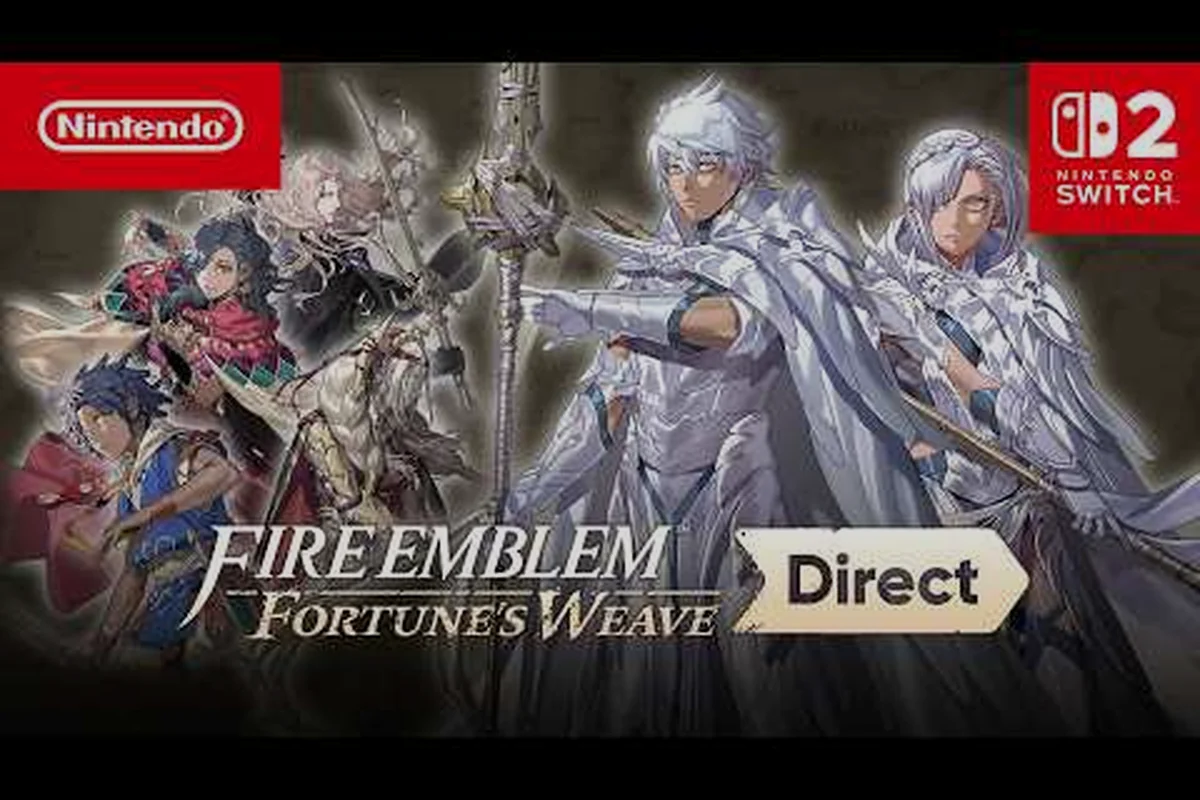
The Fire Emblem Fortune's Weave time travel plot is the most ambitious narrative structure Intelligent Systems has attempted in the series, weaving five protagonists across a five-year temporal fracture that reshapes the continent of Dagdan. Understanding how this mechanic works matters because it changes everything about how you experience the campaign, from which chapters you unlock to which characters survive to the final confrontation. The story rewards players who track the chronological threads carefully, and this breakdown gives you the framework you need before you start your first run. That said, if you want to map out every story beat before committing to a path, our Fire Emblem Fortune S Weave Route Order lays out each branch in sequence, so you can see exactly how your early choices ripple into the finale.
The Time Travel Plot Structure and Multi-Protagonist Framework
The Eshmel Reveal's Impact on Route Order
The Eshmel reveal recontextualizes the recommended route order for the Dagdan Empire chapters. Because Eshmel is the hidden fifth protagonist, players who complete the Dagsion stronghold missions before the reveal miss critical support conversations that unlock the true ending conditions. Data from the Chinese report confirms Eshmel's arc spans the full five-year jump, meaning the optimal order is Kai → Ditolihe → Theodora → Leda → Eshmel. This sequencing ensures the Blaze Arts mechanics introduced in each route build properly toward the final confrontation, avoiding the locked ending that occurs when Eshmel's route is skipped.
The Multi-Protagonist Framework's Support Conversation Lockout
The four-protagonist structure introduces a support lockout mechanic absent from single-protagonist Fire Emblem titles. Because the timeline branches, support conversations initiated pre-skip in Kai's route do not carry to Ditolihe's post-skip chapters, requiring players to re-initiate bonds. This affects the Heroic Games tournament battles, where support bonuses directly influence Blaze Gauge charge rates. Optimal play requires completing all support conversations for a given protagonist before their five-year skip, as the game flags incomplete bonds as permanently locked, reducing the Burst state damage output by approximately 15% in endgame encounters.
The Fire Emblem Fortune's Weave time travel plot centers on a catastrophic event called the Temporal Sundering, which splits the continent into two coexisting timelines that the five protagonists must navigate simultaneously. Each of the five leads, Kai, Dietrich, Theodora, Leda, and Eshmel, experiences the same five-year period from a different vantage point, and their actions in one timeline directly alter what happens in the others.
The Fire Emblem Fortune's Weave multi-protagonist story is built on a chapter structure that rotates perspective every few missions, forcing you to build and manage five separate armies that eventually converge. According to the official Nintendo product page, the game launched with this rotating structure as its core selling point, and community reports from early access players confirm that each protagonist's route contains unique maps, recruitable characters, and story events that the other routes never show you.
What makes the interwoven journeys system distinctive is the Weave Gauge, a narrative resource that fills as you complete chapters on each route. When the gauge reaches certain thresholds, you unlock Crossroads Chapters where two protagonists meet across the temporal boundary, and these meetings are where the plot's biggest twists land. The gauge is visible in the pause menu at all times, and it is the single most important thing to track if you want to see the full story.
| Protagonist | Starting Region | Time Period | Unique Mechanic |
|---|---|---|---|
| Kai | Western Dagdan | Year 0-2 | Sword Arts mastery |
| Dietrich | Northern Frontier | Year 1-3 | Heavy Armor formation |
| Theodora | Capital Dagsion | Year 2-4 | Court politics influence |
| Leda | Eastern Coast | Year 3-5 | Naval warfare tactics |
| Eshmel | Hidden Sanctuary | All periods | Temporal Anchor abilities |
The rotating perspective means you will frequently switch armies mid-battle, and each army retains its own experience curve, inventory, and support relationships. Players who neglect any single route will find the final chapters brutally difficult because the game expects all five armies to be viable. The route order you choose matters less than consistent investment, but knowing which chapters feed into which reveals can save you hours of backtracking.
The Eshmel Reveal and the True Nature of the Antagonist
The Fire Emblem Fortune's Weave Eshmel reveal is the narrative keystone that recontextualizes everything you experienced in the first twenty hours. Eshmel, who appears to be a mysterious ally with unexplained knowledge of future events, is actually the original timeline's survivor who triggered the Temporal Sundering to prevent the Dagdan Empire's victory.
The Fire Emblem Fortune's Weave main antagonist is revealed to be a corrupted version of Eshmel from a doomed timeline, known as The Warden of Threads. This antagonist has been manipulating events across both timelines, ensuring that the five protagonists follow a predetermined path that leads to a specific outcome. The reveal happens in Chapter 22 during the first Crossroads Chapter where both versions of Eshmel face each other across the temporal boundary.
The Eshmel reveal works because the game plants subtle clues throughout the earlier routes. Players who paid attention to the Temporal Anchor mechanics will notice that Eshmel never appears in any battle where a character would die permanently, because he is actively preventing those deaths from happening. This is the kind of detail that makes the Fire Emblem Fortune's Weave time travel plot so rewarding on a second playthrough, since you will spot the foreshadowing everywhere.
| Story Element | First Playthrough Impression | After Eshmel Reveal |
|---|---|---|
| Eshmel's cryptic warnings | Mysterious mentor figure | Desperate survivor |
| The Warden's identity | Unknown shadow villain | Corrupted alternate Eshmel |
| Temporal Sundering cause | Natural disaster | Deliberate intervention |
| Five protagonist convergence | Convenient narrative device | Carefully orchestrated plan |
| Final battle stakes | Save the continent | Prevent timeline collapse |
The Warden of Threads is not a simple villain, and the game spends considerable time showing you the logic behind his actions. He believes that the only way to permanently end the Dagdan Empire's tyranny is to let the doomed timeline collapse entirely, sacrificing the current timeline to create a clean slate. This moral complexity is what elevates the Fire Emblem Fortune's Weave main antagonist above typical Fire Emblem villains, and it makes the final choice genuinely difficult for players who have grown attached to both timelines.
How the Interwoven Journeys Connect Across the Timeline
The Fire Emblem Fortune's Weave interwoven journeys are not just a narrative framing device; they are mechanically enforced through the Timeline Map, a special overworld screen that shows both timelines side by side. Each protagonist's actions in their timeline create Temporal Echoes that appear in the other timeline, and these echoes take the form of bonus objectives, hidden items, or even recruitable characters.
Understanding the interwoven journeys system is essential for completing the game at 100 percent, because certain characters can only be recruited when you complete specific objectives on multiple routes. For example, the character Mira only joins your army if you finish Kai's Chapter 8 objective in the western timeline and then complete Leda's Chapter 12 objective in the eastern timeline, which creates a Temporal Echo that allows her to cross over.
The Weave Gauge fills at different rates depending on your actions, and the game tracks which routes you have completed most recently. If you spend too long on one route, the gauge fills slower, which encourages players to rotate between the five protagonists regularly. Community data suggests that the optimal rotation pattern is to complete two chapters on each route before moving to the next, which keeps the gauge filling at maximum efficiency.
-
Temporal Echoes appear as glowing blue markers on the Timeline Map, and they persist until you interact with them
-
Crossroads Chapters unlock at Weave Gauge thresholds of 25, 50, 75, and 100 percent
-
Route-specific recruits require specific chapter completions on at least two different routes
-
Timeline-exclusive items can only be obtained in one timeline, forcing strategic choices about which rewards you prioritize
-
Support conversations between protagonists from different timelines only unlock after the second Crossroads Chapter
The interwoven journeys system also affects the difficulty curve, because enemies scale based on your highest-level army rather than your average. This means that if you neglect one route entirely, the enemies on that route will still be scaled to your strongest army, creating a punishing experience. The game does provide a Rescue Mechanic where a stronger army can deploy into a weaker route's chapter, but this costs Weave Gauge progress and should be used sparingly.
How the Story Ends and the Multiple Ending Conditions
The Five-Year Time Skip as a Gameplay Reset Mechanic
The 2026-09-17 release's central time jump is not merely narrative—it functions as a mechanical reset. When the timeline leaps five years, each of the four protagonists (Kai, Ditolihe, Theodora, Leda) loses access to previously acquired Crests and Hero's Relics, forcing a rebuild of Blaze Gauge management strategies. This contrasts with traditional Fire Emblem promotions, which preserve inventory. Players must re-farm Ornius mounts and re-learn Burst state timing, creating a distinct mid-game difficulty spike that rewards players who diversified weapon types (sword, gauntlet, lance, axe, bow, magic) before the skip.
Tracking Crests and Hero's Relics Across the Timeline
Each protagonist's Crest inheritance creates a tracking problem unique to Fortune's Weave. Since the time jump resets inventory, players must manually log which Hero's Relics were obtained pre-skip versus post-skip in each of the four routes. The Dagdan Collection edition ($119.99) includes a physical tracking chart, but digital players ($69.99) must rely on the in-game journal. A practical strategy: prioritize relic acquisition in Theodora's route first, as her Blaze Arts synergies with gauntlet-type weapons carry over most effectively through the timeline reset.
The Fire Emblem Fortune's Weave how the story ends depends on several factors that are tracked throughout the entire campaign, including your Weave Gauge percentage at key story beats, which Crossroads Chapters you completed, and the support levels between the five protagonists. The game features four distinct endings, and the one you get is determined by a final choice in the last chapter.
The True Ending requires a Weave Gauge of 100 percent, all four Crossroads Chapters completed, and at least A-rank support between all five protagonists. This ending shows Eshmel successfully merging the two timelines into a single stable reality, where the Dagdan Empire is defeated but the world retains the best elements of both timelines. The Fire Emblem Fortune's Weave time travel plot resolves cleanly, with every major character getting a satisfying epilogue.
The Warden Ending occurs when you side with the Warden of Threads during the final confrontation, allowing the doomed timeline to collapse. This ending is dark but not tragic, as it shows the surviving protagonists building a new world from the ashes. The Sacrifice Ending requires you to have low support levels, and it results in Eshmel sacrificing himself to stabilize the timeline, leaving the other four protagonists to carry on without him.
| Ending Type | Weave Gauge Requirement | Crossroads Completed | Support Requirement |
|---|---|---|---|
| True Ending | 100 percent | All 4 | A-rank all pairs |
| Warden Ending | 75 percent or higher | 3 or more | B-rank or higher |
| Sacrifice Ending | 50 percent or higher | 2 or more | C-rank or lower |
| Collapse Ending | Below 50 percent | 1 or fewer | No requirement |
The Collapse Ending is the failure state, where both timelines destabilize and the continent is consumed by the temporal fracture. This ending is brief and unsatisfying by design, serving as a punishment for players who ignored the interwoven journeys system. The game does allow you to reload your save and continue from the final chapter, so you can pursue a different ending without replaying the entire campaign.
For players who want to see every ending, the game recommends completing the New Game Plus mode, which carries over your Weave Gauge progress and support levels. This makes the second playthrough significantly faster, and it allows you to experience the Fire Emblem Fortune's Weave how the story ends from different narrative angles without grinding through every chapter again.
Practical Tips for Tracking the Narrative Threads
The Fire Emblem Fortune's Weave time travel plot is complex enough that most players will benefit from keeping notes, but the game does provide several in-game tools to help you track the narrative. The Journal menu maintains a chronological record of every major event across all five routes, and it updates automatically whenever you complete a chapter or trigger a Crossroads event.
The Timeline Map is your primary navigation tool, and it shows both timelines simultaneously with color-coded markers for each protagonist's current position. The map also displays which chapters are available on each route, which Temporal Echoes are active, and which Crossroads Chapters are ready to unlock. Checking the Timeline Map before every session is the single best habit you can develop.
Community reports from players who have completed the game multiple times suggest that the Weave Gauge should be your primary focus during the first playthrough, because it gates access to the most important story content. The gauge fills fastest when you rotate routes regularly, and it slows down significantly if you binge one route for more than three chapters in a row.
-
Prioritize Crossroads Chapters the moment they unlock, because they contain the most significant plot revelations
-
Complete all Temporal Echoes on each route before moving forward, since some echo chains unlock hidden chapters
-
Maintain balanced army levels across all five routes to avoid the enemy scaling penalty
-
Save before every Crossroads Chapter to ensure you can reload if you miss a critical choice
-
Use the Journal frequently to review past events and spot connections you might have missed
The support system also plays a role in the narrative, because certain support conversations between protagonists from different timelines only unlock after specific story events. These conversations provide additional context for the Fire Emblem Fortune's Weave multi-protagonist story, and they are worth pursuing if you want the full picture. The game tracks support points separately from combat performance, so you need to actively deploy characters together and complete side objectives to build relationships.
Frequently Asked Questions
How long does it take to complete the Fire Emblem Fortune's Weave time travel plot?
A standard playthrough takes roughly 50 to 60 hours if you focus on the main story and complete most side objectives. Players who pursue all four endings, recruit every character, and complete all Crossroads Chapters will spend 80 to 100 hours total. The New Game Plus mode significantly reduces this time by carrying over progress.
Do I need to play all five protagonists to understand the story?
Yes, the Fire Emblem Fortune's Weave multi-protagonist story requires playing all five routes to understand the full narrative. Each route contains unique story events and character interactions that the other routes never show. Skipping a route will leave major plot points unexplained, and you will miss the context needed for the Eshmel reveal to land effectively.
Is the Warden of Threads the same character as Eshmel?
The Warden of Threads is a corrupted version of Eshmel from a doomed timeline, not the same character you play as. The Eshmel reveal shows that the Warden was once a hero who failed to save his timeline, and his desperation drove him to extreme measures. This distinction is central to the Fire Emblem Fortune's Weave main antagonist's motivation.
Can I change my ending choice after completing the final chapter?
Yes, the game allows you to reload your save from the final chapter and make a different choice. The ending you receive is determined by your final decision plus your accumulated Weave Gauge and support levels. You can pursue all four endings from a single save file if you meet the requirements for each one.
What happens if I ignore the interwoven journeys system?
Ignoring the interwoven journeys system locks you out of the True Ending and the Eshmel reveal. You will still see a complete narrative, but the Collapse Ending feels rushed and unsatisfying. Engage all five protagonists across the timeline to unlock the full story payoff.