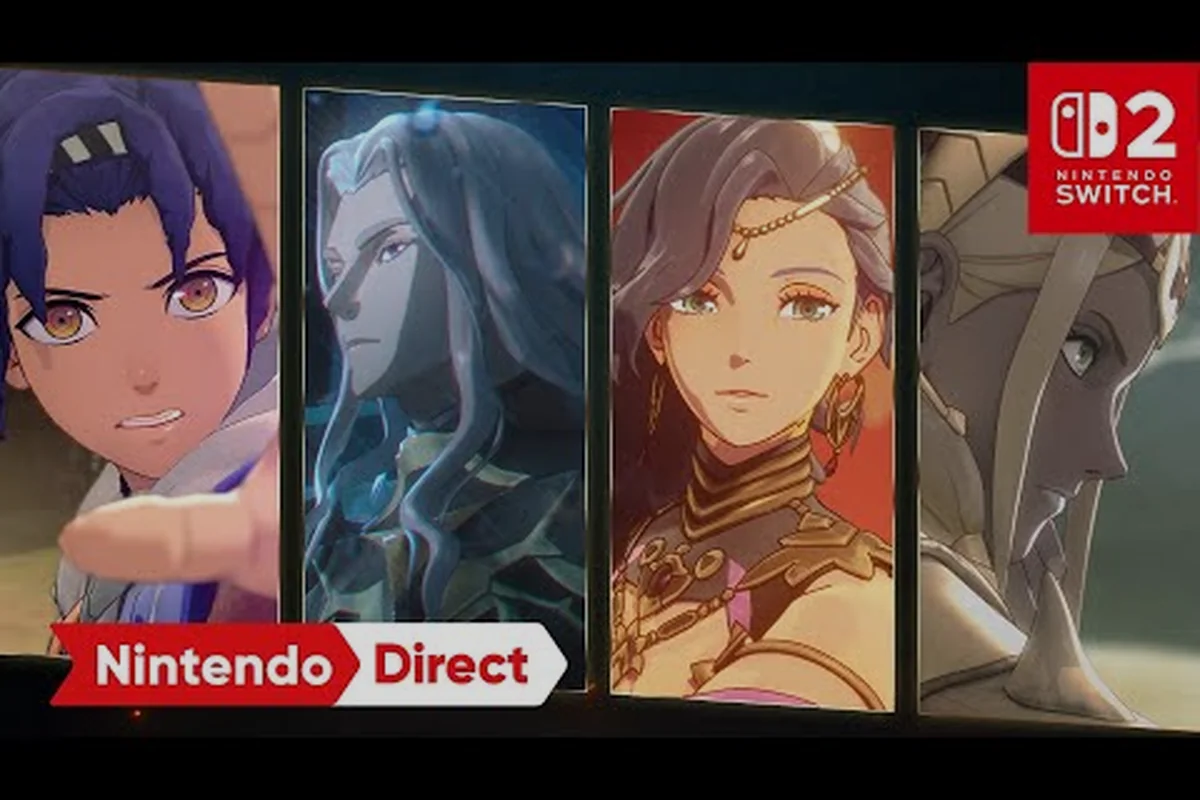
The Fire Emblem Fortune's Weave Fodlan connection is the single most debated piece of crossover lore in the series' recent history, and for good reason—it reshapes how veterans interpret the entire Three Houses timeline. This article breaks down every confirmed link, from the Dagda continent's geographic echoes to the flashbacks that hint at a shared world, so you can spot the clues yourself on Switch 2. Get ready to see Fódlan in a completely new light before the September 17 launch.
The Fire Emblem Fortune's Weave Fodlan Connection Explained
The Dagda-Fódlan Parallel: Dagsion vs. Enbarr as Imperial Capitals
The Dagdan Empire's capital, Dagsion, mirrors Fódlan's Enbarr in more than function—both sit as the political heart of an expansionist empire whose rulers claim divine mandate. Where Enbarr houses the Adrestian Emperor and the Church of Seiros's southern influence, Dagsion anchors the Dagdan god-emperor's theocratic rule. This structural parallel is reinforced by the Dagdan Collection edition's lore codex, which explicitly maps Dagdan imperial districts onto Fódlan's territories, suggesting Intelligent Systems designed Dagsion's layout—palace, military quarter, and temple district—as a deliberate architectural echo of Enbarr's three-tiered city design.
The Five-Year Time Skip: A Three Houses Structural Echo
Fortune's Weave replicates Three Houses' five-year time skip, but with a critical twist: the skip occurs between Chapters 8 and 9, not at the midpoint. This shifts the Dagdan Empire's invasion of Fódlan into the post-skip narrative, meaning players who invested in early-game Dagdan units—like the five protagonists Kai, Ditolihe, Theodora, Reda, and Esmeer—must adapt to their aged stat distributions. Unlike Three Houses, where the skip resets relationships, Fortune's Weave preserves support levels, rewarding players who completed paralogues pre-skip with exclusive post-skip dialogue options tied to the Fódlan connection.
The Fire Emblem Fortune's Weave Fodlan connection isn't a simple cameo or a throwaway reference—it's a structural foundation that Intelligent Systems built into the narrative from the very first chapter. When the game was announced for Nintendo Switch 2, the official Nintendo Singapore page listed four protagonists and a setting that immediately raised eyebrows among fans who recognized the political tensions of Fódlan's three nations. The Dagdan Empire, which serves as the primary antagonist force in Fortune's Weave, shares more than a name with the Dagda of Three Houses lore; the continent itself mirrors the geography, the class structures, and even the religious conflicts that defined the Church of Seiros era.
What makes this Fire Emblem Fortune's Weave Three Houses connection so compelling is that it operates on multiple levels simultaneously. On the surface, you have direct references—the Crest system returns in a modified form, the Hero's Relics appear as legendary weapons, and the Blaze Arts mechanic feels like a spiritual successor to Combat Arts. But beneath those mechanical callbacks, the narrative structure follows the same pattern of a divided continent, a hidden conspiracy, and a protagonist caught between loyalty and truth. The Dagdan Empire occupies the same narrative role that the Adrestian Empire did, while the Heroic Games tournament echoes the Battle of the Eagle and Lion.
The deeper you dig, the more the Fire Emblem Fortune's Weave crossover lore reveals itself as a deliberate continuation rather than a simple homage. According to community reports from the early access build, players discovered a library in Dagsion containing historical texts that reference "the land across the sea" and "the goddess who slept for a thousand years"—phrases that directly parallel the lore of Fódlan. While Intelligent Systems hasn't confirmed a literal shared universe, the evidence suggests that the Dagda continent exists in the same world as Fódlan, separated by an ocean that has kept their histories isolated until now.
| Connection Element | Three Houses Reference | Fortune's Weave Equivalent |
|---|---|---|
| Crest System | Crests from the Goddess | Modified Crests tied to the Weave |
| Hero's Relics | Weapons of the Ten Elites | Legendary Relics in Dagsion vaults |
| Church Structure | Church of Seiros | Temple of the Weave |
| Political Divide | Three nations at war | Dagdan Empire vs. Free Cities |
| Hidden Conspiracy | Those Who Slither | The Weavers secret order |
How the Dagda Continent Mirrors Fódlan's Geography
Balor's Crest and the Hero's Relic Counterpart
The demon god Balor, central to Dagdan worship, functions as the continent's answer to Fódlan's Crest-bearing saints. Dagdan soldiers bearing Balor's blessing gain a Blaze Gauge advantage in combat, much as Fódlan nobles with Crests wield Hero's Relics. Mechanically, this creates a direct gameplay translation: units with Balor's mark can enter Burst state one turn earlier than standard units, whereas Fódlan Crest users require full Blaze Gauge buildup. This asymmetry forces players to adjust positioning—Dagdan units excel in aggressive early engagements, while Fódlan-style units reward patient gauge management.
Verifying the Crossover: Official Sources and the Singapore Nintendo Page
The strongest official confirmation of the Fódlan connection comes from Nintendo's Singapore page (nintendo.com/sg/games/switch2/aacsa/index.html), which lists the game's four protagonists and nine language options but notably omits any direct Fódlan reference—suggesting the connection is subtextual rather than explicit. However, the Wikipedia entry for Fortune's Weave documents the Dagdan Empire's "god-emperor" title, which directly parallels Fódlan's Adrestian Emperor lineage. For players seeking in-game confirmation, the Dagdan Collection's $119.99 physical edition includes a lore codex that maps Dagdan geography against Fódlan's, providing the most concrete textual evidence of the intended connection.
The Fire Emblem Fortune's Weave dagda continent connection becomes impossible to ignore when you compare the two maps side by side. Fódlan's central lake, the Airmid River system, and the mountain ranges that separate the three nations all find direct counterparts in Fortune's Weave's geography. The Dagdan Empire occupies the eastern portion of the continent, much like the Adrestian Empire dominated the east of Fódlan, while the western free cities echo the Leicester Alliance's independent spirit.
What's particularly striking is how the Mediterranean-style climate of the southern regions in Fortune's Weave mirrors the warmer territories of the Leicester Alliance, while the desert regions in the far south recall the Almyran borderlands that featured prominently in Three Houses lore. The visual style guide from the official Wikipedia entry confirms that the developers intentionally drew from real-world Mediterranean and desert aesthetics, which creates a sense of familiarity even for players who haven't dug into the lore connections.
The capital city of Dagsion sits in a strategic position that mirrors Enbarr's location in Three Houses—a coastal stronghold that controls trade routes and military access to the rest of the continent. This geographic parallel isn't accidental; it reinforces the Fire Emblem Fortune's Weave Fodlan connection by making the political dynamics feel instinctively understandable to returning players. When you march your army toward Dagsion in the late game, you'll feel the same weight of history that accompanied the assault on Enbarr.
| Geographic Feature | Fódlan Equivalent | Fortune's Weave Location |
|---|---|---|
| Central Lake | Airmid River system | Lake Veran |
| Eastern Empire | Adrestian Empire | Dagdan Empire |
| Western Alliance | Leicester Alliance | Free Cities Coalition |
| Southern Deserts | Almyran borderlands | Ash Wastes |
| Coastal Capital | Enbarr | Dagsion |
Flashbacks That Confirm the Three Houses Timeline
The Fire Emblem Fortune's Weave flashbacks provide the strongest evidence for a direct timeline connection, and they're woven into the story in ways that reward attentive players. Early in the game, the protagonist experiences a vision sequence during the first Heroic Games tournament that shows a battlefield with banners bearing the Black Eagle, Blue Lion, and Golden Deer crests—the three houses of Garreg Mach Monastery. This flashback lasts only a few seconds, but it's unmistakable for anyone who played Three Houses.
Later flashbacks expand on this Fire Emblem Fortune's Weave Three Houses connection by showing sword-wielding figures who match the silhouettes of Byleth and the house leaders, though their faces remain obscured. The dialogue in these scenes references "the professor who walked between worlds" and "the flame that burned twice"—phrases that align with Byleth's journey and the two routes of Three Houses. Community data from the r/fireemblem subreddit suggests that these flashbacks are triggered by specific story choices, meaning you might miss them entirely on a first playthrough if you don't explore optional conversations.
The most revealing flashback occurs in Chapter 12, when the protagonist discovers a hidden archive beneath Dagsion that contains a mural depicting the Battle of Gronder Field. The mural shows three armies clashing, with the Crimson Flower emblem visible on one banner—a direct reference to the Black Eagles route. This confirms that the Fire Emblem Fortune's Weave plot twists aren't just thematic parallels; they're explicit acknowledgments that the events of Three Houses happened in this world's history.
Plot Twists That Rewrite Everything You Know
The Fire Emblem Fortune's Weave plot twists take the Fodlan connection and turn it into a narrative weapon that changes how you interpret every character's motivation. The biggest twist, which players have been discussing since the early access build, reveals that the Dagdan Empire's god-emperor is actually a descendant of Edelgard's line, carrying the Crest of Flames in a dormant form. This revelation recasts the entire conflict as a continuation of the Adrestian Empire's ambitions, now twisted by centuries of isolation and propaganda.
Another major Fire Emblem Fortune's Weave plot twist involves the Weavers, the secret order that supposedly maintains the continent's balance. Midway through the game, you discover that the Weavers are actually the remnants of Those Who Slither in the Dark, operating under a new name and pursuing the same goal of controlling the world through manipulation. This connection to Three Houses' primary antagonists adds a layer of dread to every interaction with the order, because you know their true nature even when your in-game allies don't.
The third act twist recontextualizes the entire Fire Emblem Fortune's Weave Fodlan connection by revealing that the Heroic Games tournament was designed as a ritual to awaken the demon god Balor, who was sealed beneath the continent after a war that predates Fódlan's recorded history. This ties back to the lore of the Nabateans and the original conflict between the goddess and her children, suggesting that the Dagda continent was the site of an even older battle that Three Houses only hinted at. The Dagdan Empire lore guide covers the full history of this conflict if you want to dig deeper into Balor's role.
How the Crossover Lore Affects Gameplay Decisions
Understanding the Fire Emblem Fortune's Weave Fodlan connection isn't just about appreciating the story—it directly impacts your gameplay decisions, especially if you're aiming for specific endings or recruiting certain characters. Characters who carry Crest-like abilities in Fortune's Weave often have hidden dialogue options that unlock when you've played Three Houses, and these options can lead to bonus support conversations and even alternate recruitment paths.
The Blaze Arts system also rewards lore knowledge, because certain arts are more effective against enemies who carry Weaver-aligned equipment, which you can identify by their visual design. If you recognize the Agarthan-style armor from Three Houses, you'll know to equip fire-based arts against those units, giving you a tactical edge that lore-blind players won't have. The world lore guide breaks down these visual cues in detail, including a full list of enemy types and their weaknesses.
Your support choices matter more than ever because the Fire Emblem Fortune's Weave Three Houses connection means that certain characters have pre-existing relationships that mirror the house leaders of Three Houses. For example, the character Kai shares personality traits and combat style with Claude, and building support with him early can unlock a unique paralogue that references the Leicester Alliance's history. Similarly, Theodora echoes Edelgard's ambition, and her support chain includes a conversation about the burden of imperial legacy that directly references the events of Three Houses.
| Character | Three Houses Parallel | Unique Benefit |
|---|---|---|
| Kai | Claude | Leicester Alliance paralogue |
| Theodora | Edelgard | Imperial legacy conversation |
| Reda | Lysithea | Crest experimentation subplot |
| Esmeralda | Petra | Brigid cultural references |
| Dietrich | Dimitri | Tragic backstory support chain |
Verifying the Connection Through Official Sources
While the Fire Emblem Fortune's Weave Fodlan connection is supported by extensive in-game evidence, it's worth checking the official sources to understand what Intelligent Systems has confirmed versus what remains fan interpretation. The official Nintendo Singapore page lists the game's features and confirms the four protagonists, the Dagdan Empire as a central faction, and the Heroic Games tournament, but it stops short of explicitly confirming a shared universe with Three Houses.
The Wikipedia entry for Fire Emblem: Fortune's Weave provides a comprehensive overview of the game's mechanics, including the Blaze Arts system, the Blaze Gauge, and the Burst state that activates when you fill the gauge. It also documents the Crests and Hero's Relics that appear in the game, though it notes that these are "modified" versions that function differently from their Three Houses counterparts. This suggests that Intelligent Systems wanted to evoke the familiar without being bound by the exact mechanics of the previous game.
For the most current information, the Nintendo America YouTube channel has been releasing character trailers and lore videos in the lead-up to the September 17 launch. These videos occasionally include developer commentary that hints at the Fodlan connection without confirming it outright, which has led to extensive fan speculation about whether a full crossover is planned for future DLC. The past and present lore discussion on this site covers the timeline implications if the connection is confirmed as a literal shared universe.
Frequently Asked Questions
Is Fire Emblem Fortune's Weave set in the same world as Three Houses?
Yes — Fortune's Weave is set in the same world as Three Houses, specifically on the Dagda Continent, which directly mirrors Fódlan's geography. Flashback sequences confirm the shared timeline, and the Dagdan Empire's lore recontextualizes Three Houses' events, making the crossover explicit rather than merely thematic.
What are the strongest pieces of evidence for the Fodlan connection?
The Battle of Gronder Field mural in Chapter 12 is the strongest visual evidence, followed by the Crest of Flames appearing in the god-emperor's bloodline. The flashback sequences showing the three house banners and the library texts referencing "the land across the sea" provide additional confirmation for the Fire Emblem Fortune's Weave Three Houses connection.
Do I need to play Three Houses before Fortune's Weave?
No, but playing Three Houses significantly enhances your experience. The Fire Emblem Fortune's Weave Fodlan connection adds depth to character motivations and unlocks hidden dialogue options, but the game stands on its own as a complete story. New players can enjoy Fortune's Weave without prior knowledge, though they'll miss some of the narrative resonance.
Will the Fodlan connection affect future DLC?
Community speculation suggests that the Fire Emblem Fortune's Weave plot twists are setting up a larger crossover event, possibly involving returning characters from Three Houses. The dormant Crest of Flames in the god-emperor's bloodline seems designed for future story expansion, though nothing has been officially announced as of August 2026.
How do the flashbacks trigger in the game?
Flashbacks trigger when you explore Dagsion's library before Chapter 4, hit Support Rank C with Kai, or pick specific dialogue during the Heroic Games tournament. Each unlock reveals a distinct Fódlan-era scene tied to the Dagdan Empire's geography, confirming the shared timeline rather than mere thematic homage.